
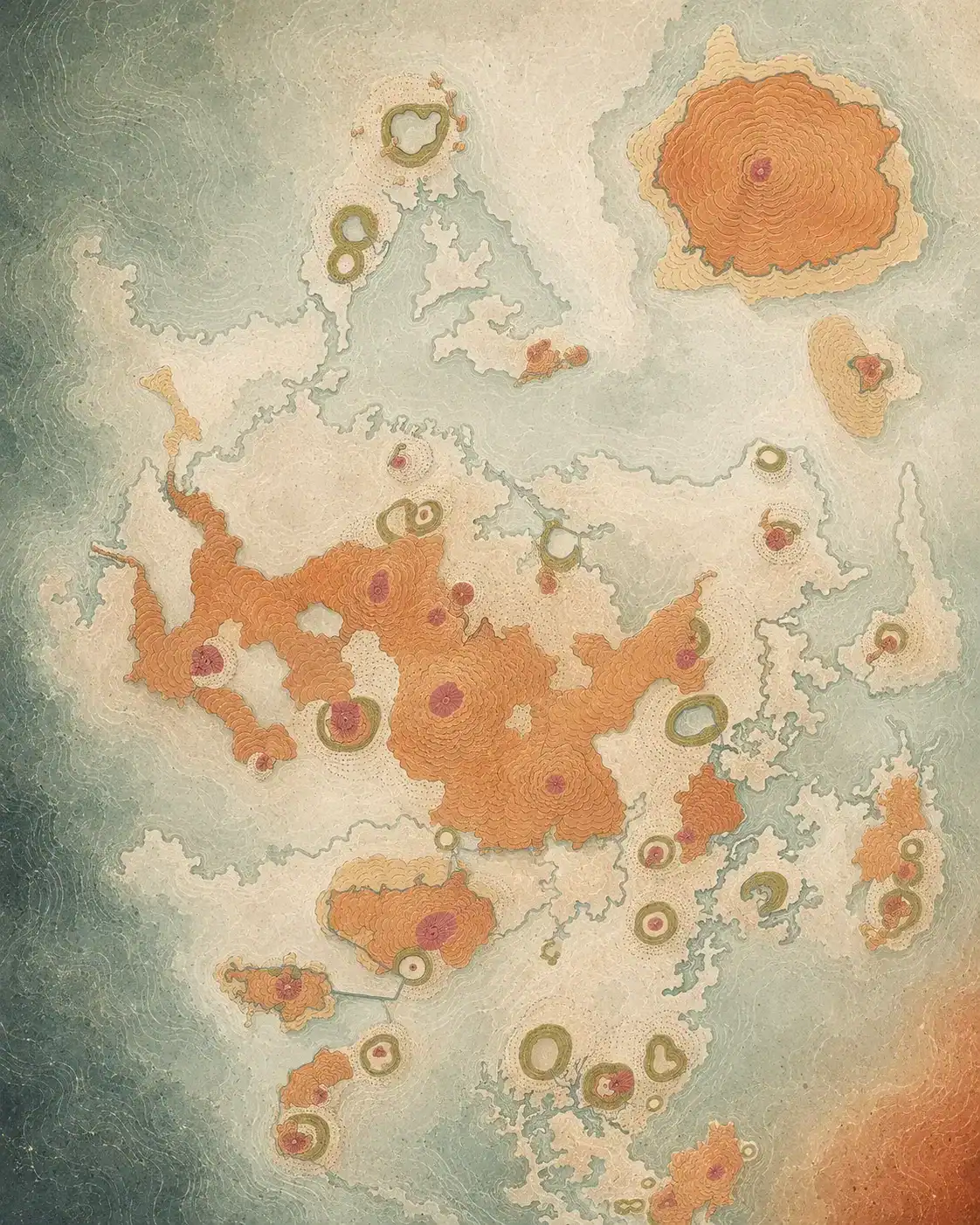
Our volcanic story
Our volcanic past
Explore past eruptions
- 200,000 years of activity
- 80-100km below Auckland magma generates
- ~600 years ago last erupted
The Auckland region has a long history of being affected by volcanic eruptions.
The region has experienced at least 53 eruptions from the Auckland Volcanic Field in the past 200,000 years, and it has been covered by ash from central North Island volcanoes at least 300 times during that period.
This animation shows the eruptions of Tāmaki Makaurau’s volcanic maunga over the last 200,000 years.
There are 53 eruptive centres or volcanoes we know of across Auckland Tāmaki Makaurau, but you could also consider the entire area to be one volcano, or a distributed volcanic field.
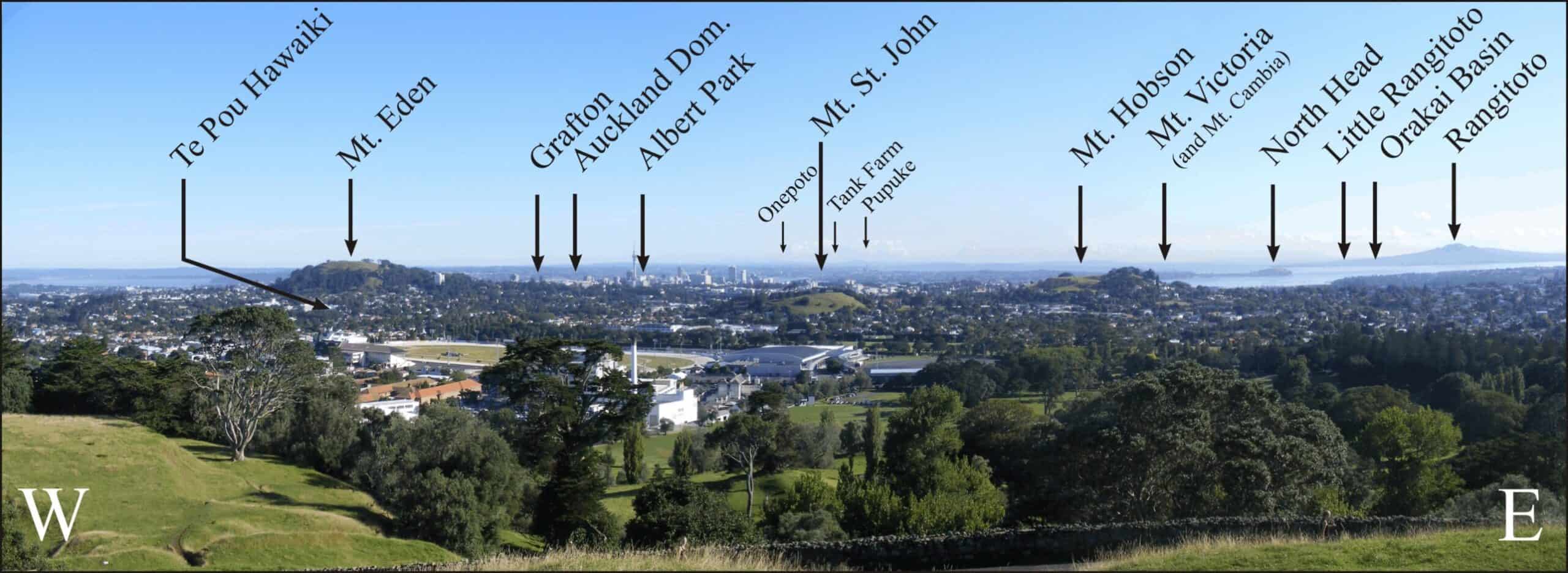
Here are just some of the volcanic maunga in the Auckland Volcanic Field.
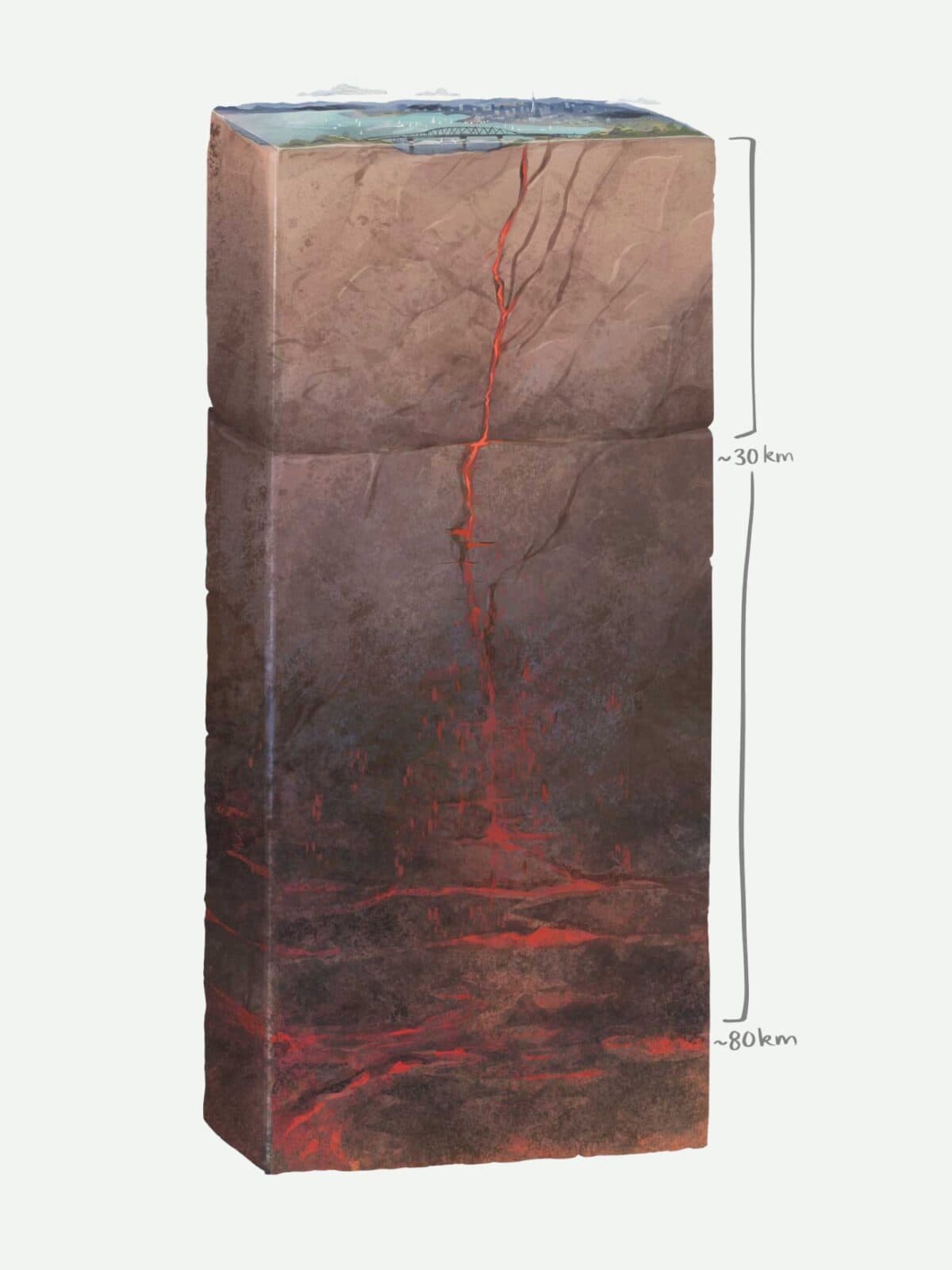
In essence, all of Tāmaki Makaurau Auckland lies above a zone of potential magma generation, about 80-100km down below the crust in Earth’s mantle.
However, because magma cools quickly and eruptions are usually hundreds of years or more apart, previous paths to a volcanic vent become closed after an eruption, probably because the magma solidifies over time in the narrow conduit to the surface. This means the magma forges a new path every time it bursts through. So, new eruptions from the Auckland Volcanic Field come up to the surface in a new, relatively random place, and we have very little idea of where the next vent could form.
The oldest eruption happened about 190,000 years ago, but over half of the eruptions we know about have occurred in the last 60,000 years.
To determine exactly how often the Auckland region has been affected by eruptions, we study ash layers that have been preserved in lake beds. The research tells us that ash has fallen on Auckland at least once every ~2,500 years from an Auckland Volcanic Field eruption, and at least once every ~450 years from an eruption from a more distant volcano. Find out more about the risk of a future eruption.
DEVORA researchers are gathering data to explain how, why, how often and how fast magma moved to the surface in the Auckland Volcanic Field, to inform our modelling and planning for when it happens again. We are also studying the deposits of past eruptions to learn more about how and when our volcanoes formed.
The Tūpuna Maunga (ancestral mountains) / volcanic cones of Tāmaki hold a paramount place in the historical, spiritual, ancestral and cultural identity of the thirteen iwi and hapū of Ngā Mana Whenua o Tāmaki Makaurau. If you’re interested in finding out about the cultural and human history of the Auckland Volcanic Field as well, you should visit Tūpuna Maunga Authority.
Keep reading
More about our volcanic past
-
Our geology
Explaining the geological history of the Auckland Volcanic Field
-
How distributed volcanic fields work
Instead of most eruptions taking place at one central vent at the summit, eruptions in volcanic fields usually take place from a new vent in a new location.
-
Frequency of eruptions
The chance of a future eruption is roughly 10% over the next 50 years, based on a gap of about 500 years between eruptions over the last 60,000 years.
-
Human geography
The impact of humans on Tāmaki Makaurau Auckland