
Volcanic ash
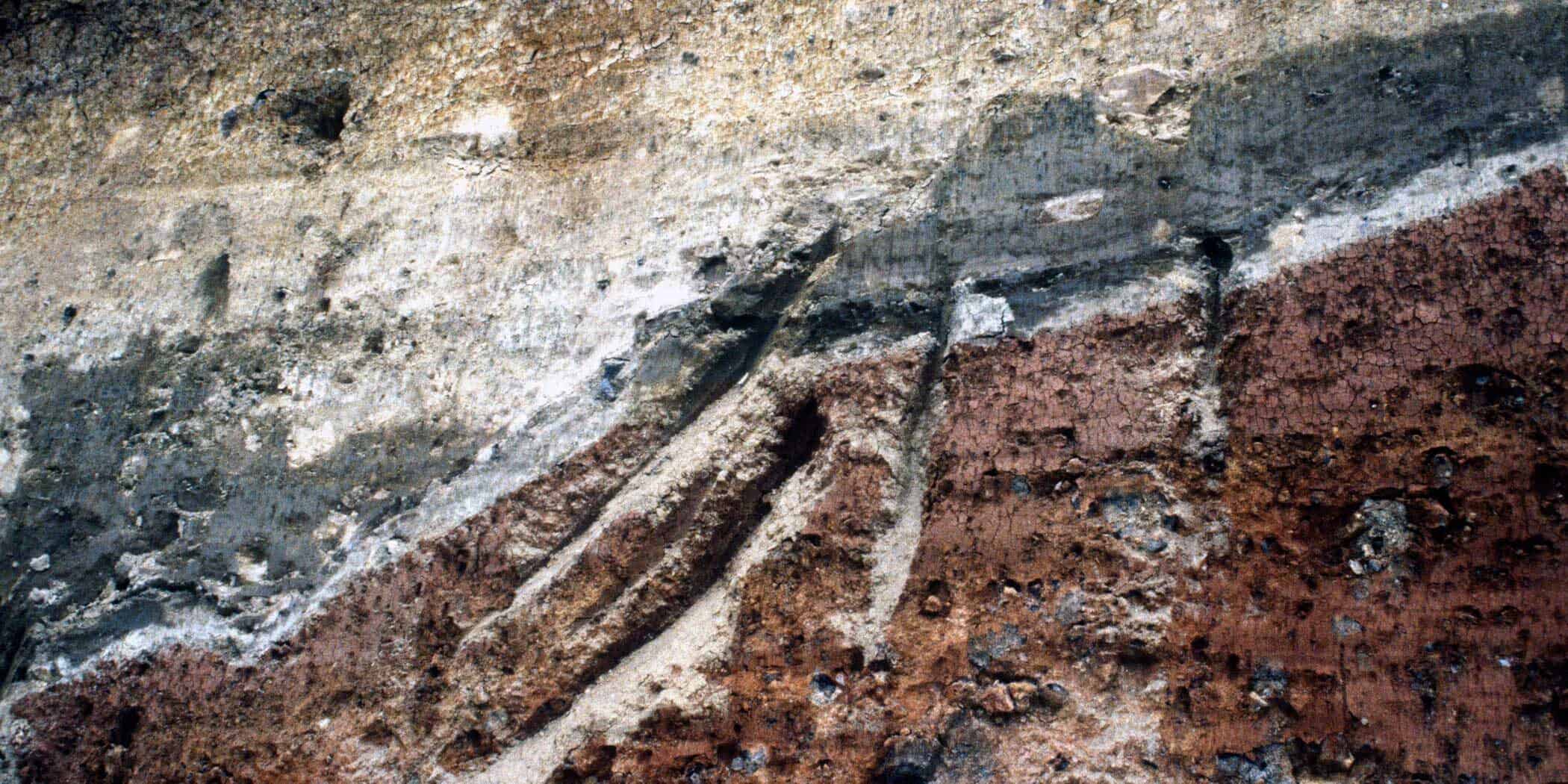
Volcanic ash in Tāmaki Makaurau can come from both Auckland volcanoes and those further afield. Auckland has been covered in ash from Taranaki volcano 52 times in the past 80,000 years. That’s once every 1,500 years.
We have learned a lot by examining ash from old eruptions:
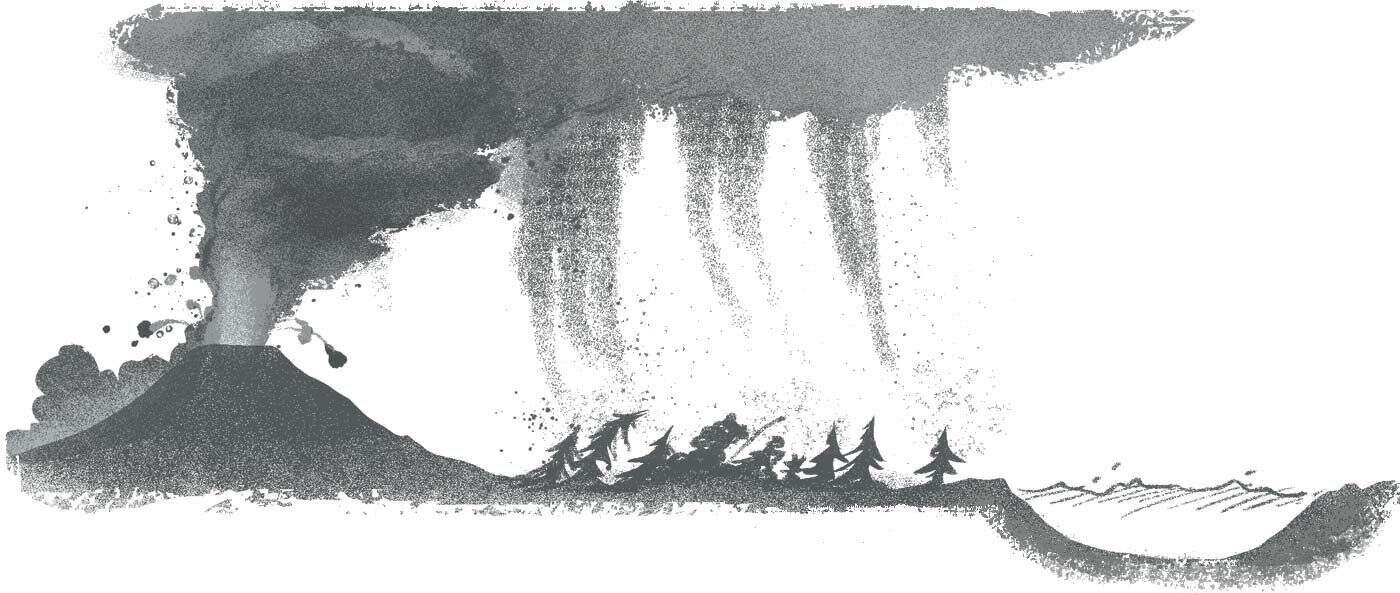
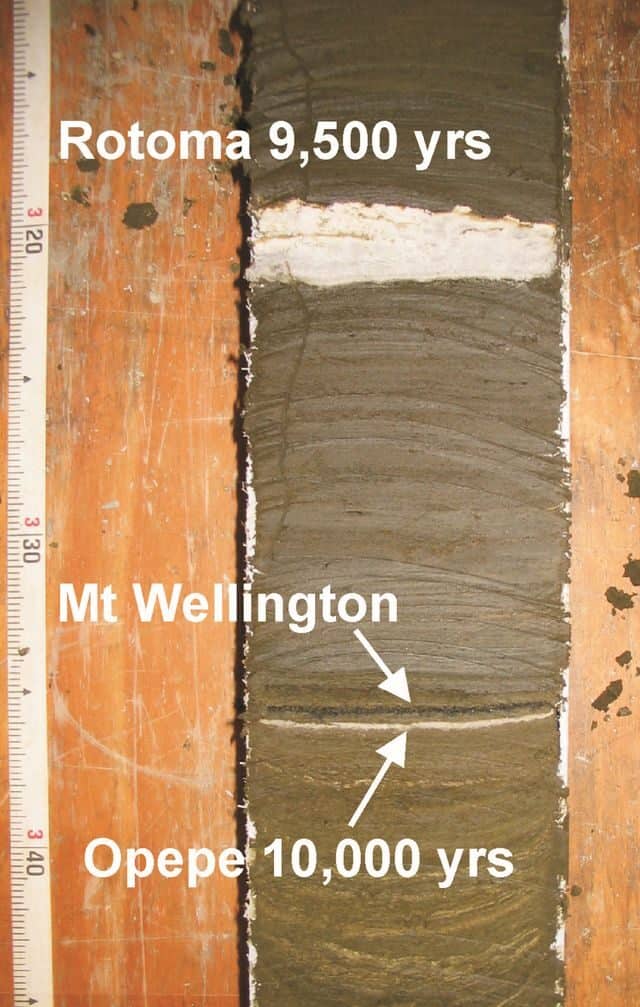
A black layer
Ash from a smaller, local Auckland volcano (e.g. Maungarei / Mt. Wellington).
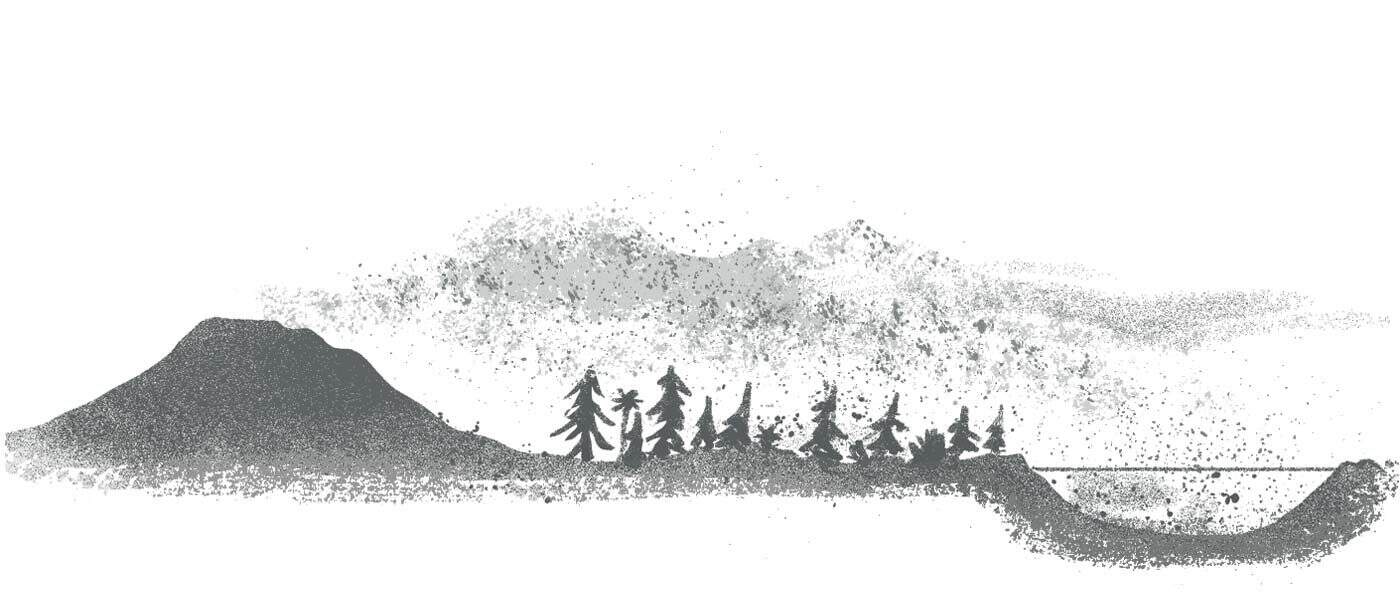
A white layer
Ash from a larger, more distant volcano (e.g. Taupō).
Some of the distant large-scale volcanic eruptions are so well studied that their ash is immediately recognisable in the core. When scientists find these ash layers, they use their ages to help figure out the age of other ash layers in the core. Ash layers below a well-studied eruption are older, while ash layers above are younger.
Volcanoes often have a unique chemical fingerprint. If the chemistry of an ash layer matches that of a previously studied eruption from a known volcano, scientists can say which volcano erupted the ash.
The thickness of an ash layer depends on the distance from the volcano and the size of the eruption. A thick ash layer means that the eruption was either very big or very close by, while a thin ash layer means the eruption was either small or far away.
Surge deposits
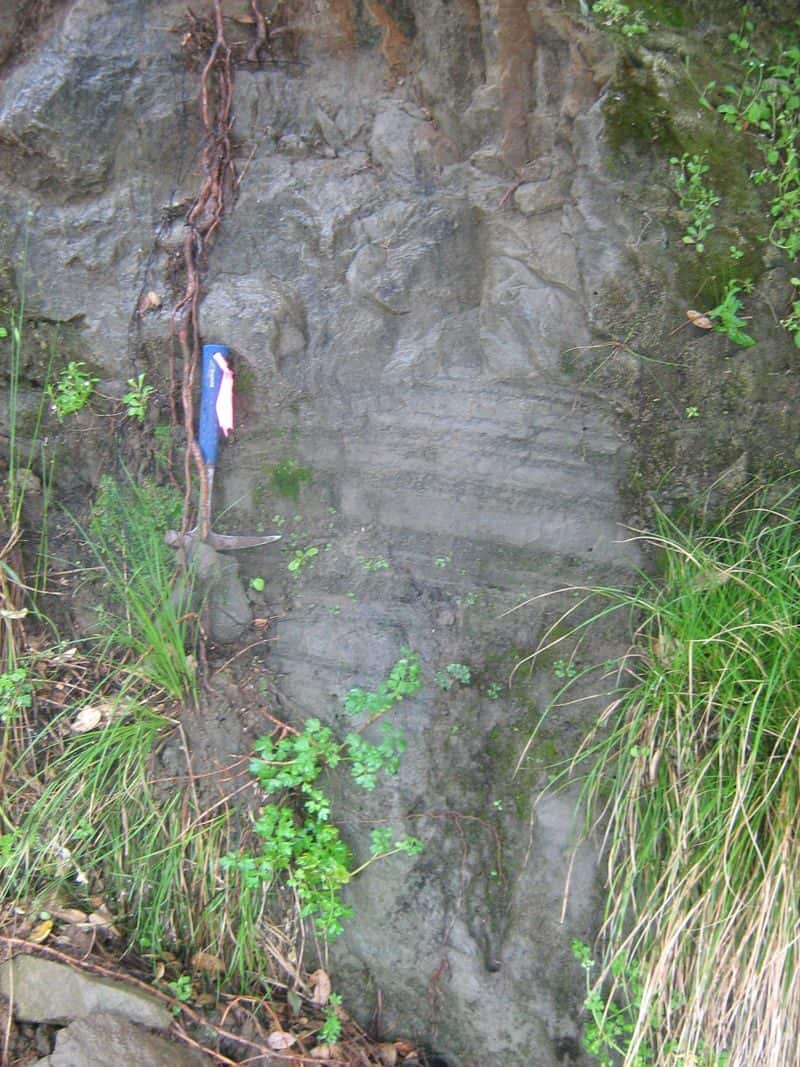
When a volcanic eruption causes a base surge, this leaves behind distinctive evidence in the geological record called surge deposits. These are typically thin layers of ash that may show rippled, wave-like structures similar to sand dunes. The deposits become thinner with increasing distance from the eruption vent, reflecting how the energy of the surge decreases outward. Good examples of these deposits can be seen in the foreshore and low cliffs at the end of Renton Road near Maungataketake / Ellets Mount, where each layer represents a separate pulse or surge of the eruption.
Lava flows and ballistics
Volcanologists also look at where lava flowed and which volcano was the source of the lava flow to understand the history and timeline of eruptions in the Auckland Volcanic Field.
They also study ballistics, looking at the rocks that hurtled from different exploding volcanoes to check for different chemical composition and the age of the ballistics.
Keep reading
More about this topic
-
Our geology
Explaining the geological history of the Auckland Volcanic Field
-
Volcanic landforms and eruption deposits
Why Tāmaki Makaurau’s landscape looks the way it does
-
How distributed volcanic fields work
Instead of most eruptions taking place at one central vent at the summit, eruptions in volcanic fields usually take place from a new vent in a new location.
-
Frequency of eruptions
The chance of a future eruption is roughly 10% over the next 50 years, based on a gap of about 500 years between eruptions over the last 60,000 years.
-
Human geography
The impact of humans on Tāmaki Makaurau Auckland
-
Hochstetter's map
The 1859 map of the Auckland isthmus and its volcanoes, and who really drew it