
Our research shows there is roughly a 10% chance of an eruption in the next 50 years.
This means an eruption is unlikely in our lifetimes. However, given the impact a future eruption could have on life safety, human health, infrastructure, and the economy, it is definitely worth preparing for!
Increased volcanism
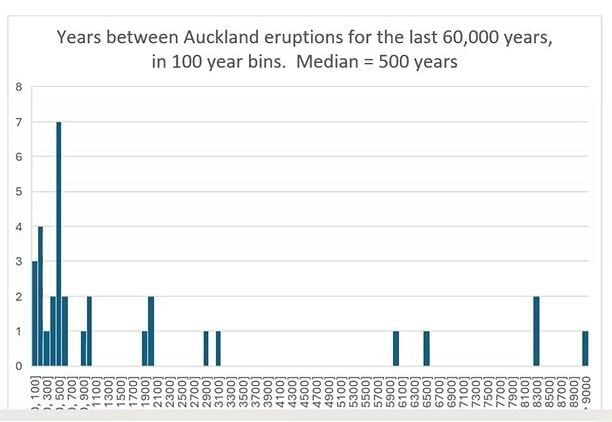
The oldest volcanoes erupted about 190,000 years ago (Pupuke Moana & Te Kopua-o-Matakerepo /Onepoto Basin), but over half of Auckland’s eruptions occurred in the last 60,000 years, meaning that the eruption rate has accelerated.
What are the statistics?
Our research shows that the chance of a future eruption is roughly 10% over the next 50 years, based on a median (middle) and modal (most common) gap of about 500 years between eruptions over the last 60,000 years. The mean (average) is not included in these statistics as the few, less common larger gaps of about 10,000 years skew the mean value, leading to an incorrect and misleading number.
How do we know about our volcanic past?
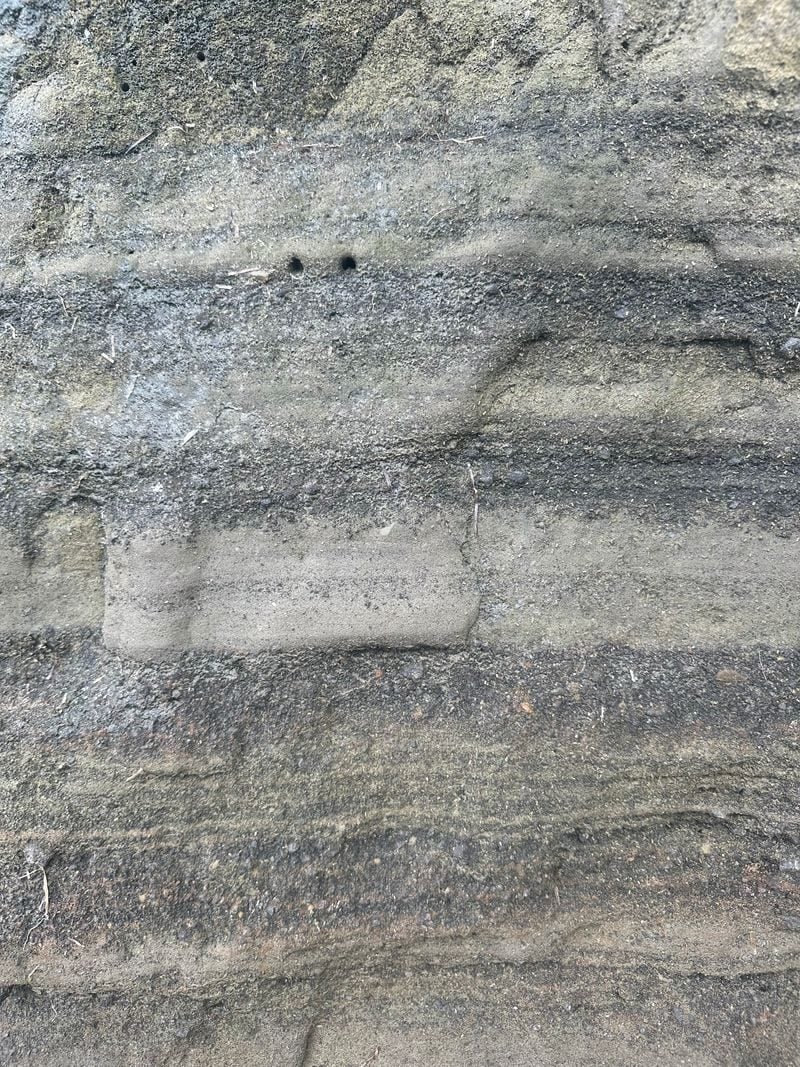
When volcanoes erupt, they eject small fragments of broken rock and lava into the air. This material is called tephra. Tephra less than 2mm in size is called ash. Ash is so small and light that it is easily picked up and carried by the wind. Ash can travel hundreds of kilometres before settling out of the ash cloud and falling to the ground.
Our scientists study the pattern of ash layers in lake sediment cores to figure out how often volcanic eruptions affect a certain area. We discovered that sometimes ash layers from Auckland volcanoes were close together in the cores, meaning there were lots of eruptions within a short time, and sometimes there were large gaps between ash layers, meaning that there was a long time gap between eruptions. This irregularity in time gaps makes it impossible to predict when the Auckland Volcanic Field will erupt again.
Some eruptions are only preserved as scattered grains of ash in tiny layers. Known as cryptotephra, these layers get their name from crypto, the Greek word for ‘secret’, and are made of glass shards so small that scientists have to use a special microscope to see them. Cryptotephra layers are sometimes the only evidence that an eruption ever happened.
Keep reading
More about this topic
-
Our geology
Explaining the geological history of the Auckland Volcanic Field
-
Volcanic landforms and eruption deposits
Why Tāmaki Makaurau’s landscape looks the way it does
-
How distributed volcanic fields work
Instead of most eruptions taking place at one central vent at the summit, eruptions in volcanic fields usually take place from a new vent in a new location.
-
Human geography
The impact of humans on Tāmaki Makaurau Auckland
-
Hochstetter's map
The 1859 map of the Auckland isthmus and its volcanoes, and who really drew it